Bringing Youth and the Elderly Together With Asahi
 Asahi Nordic Institute
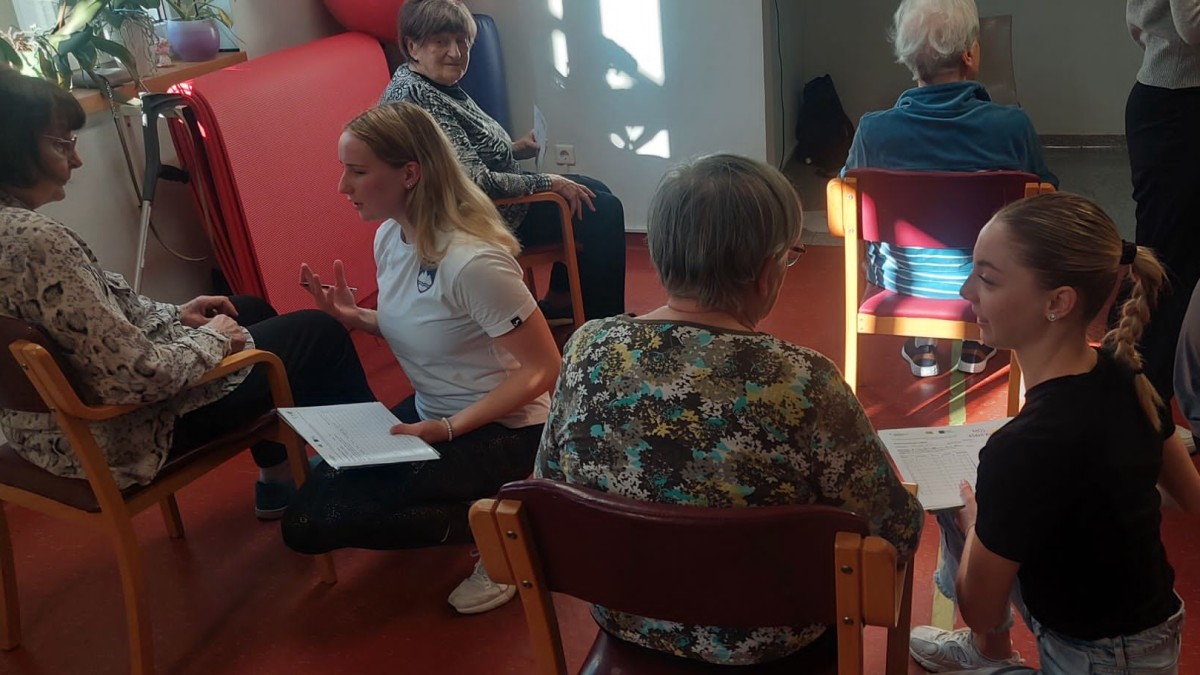
Report on a Study with Youth & the Elderly doing Asahi together in Maribor, Slovenian
The project „FLEXIBLE AND BALANCED FROM YOUTH TO OLD AGE – ASAHI NORDIC“ is implemented within the operation submitted to the Public Call „Problem-Based Learning of Students in the Work Environment: Economy, Non-Economy and Non-Profit Sector in the Local/Regional Environment 2024–2027 (PUŠ in the Work Environment 2024–2027)“ – 2nd opening 2025/2026
FLEXIBLE AND BALANCED
FROM YOUTH TO OLD AGE –
ASAHI NORDIC
Authors: Laura Angleitner Sagadin, Anja Kokotovič, Lana Petrovič, Jasna Markuš, Mihaela Škrlj Brglez
Maribor, 29 May 2026
Introduction and Topic Definition
Slovenia is facing rapid population ageing; data for 2025 show that the proportion of people over 65 years of age already exceeds 22%. As the proportion of older adults grows, so do their health challenges, with falls being the leading cause of injuries and hospitalisations in this age group. Statistics from NIJZ for 2021 record nearly 1,000 deaths due to falls, representing a rate of approximately 47 per 100,000 inhabitants, with risk increasing sharply after the age of 70. Falls often signal the end of independence, leading to reduced mobility, fear of movement (the so-called post-fall syndrome) and more frequent institutionalisation.
In this context, two key concepts are gaining prominence: active ageing and lifelong learning. Active ageing, as defined by the World Health Organization (WHO), refers to the process of optimising opportunities for health, participation and security in order to enhance quality of life as people age. WHO guidelines for maintaining the health of older adults recommend at least 150–300 minutes of moderate physical activity per week, including muscle-strengthening and balance exercises at least twice a week.
In response to these challenges, the project „Flexible and Balanced from Youth to Old Age – Asahi Nordic“ introduces the innovative Finnish Asahi Nordic exercise. It is a low-intensity workout that combines elements of Eastern traditions with insights from Western medicine. Its key advantage is accessibility: it requires no special equipment and can be performed standing or sitting, making it ideal for residents of care homes for older adults.
The research presented in this article focuses on the impact of regular Asahi Nordic exercise on the wellbeing and physical capacities of older adults in institutional care. The project is grounded in intergenerational collaboration, with students working alongside the ENO Institute and professional mentors to transfer knowledge of the exercise to older adults, thereby encouraging sustainable lifestyle changes and strengthening intergenerational solidarity.
Purpose and Objectives of the Research
The purpose of the research was to examine the impact of regular Asahi exercise on the wellbeing, energy levels and physical capacity of older adults in residential care homes. We were interested in whether a simple, adapted form of movement could contribute to improvements in their daily functioning and overall wellbeing.
The objectives of the research were:
to identify changes in the subjective wellbeing and energy levels of participants before and after each session,
to measure progress in mobility using the functional reach test,
to analyse the impact of regular Asahi exercise over time (after 10 sessions),
to gather qualitative data on participants' experience of the exercise through conversation.
Procedure
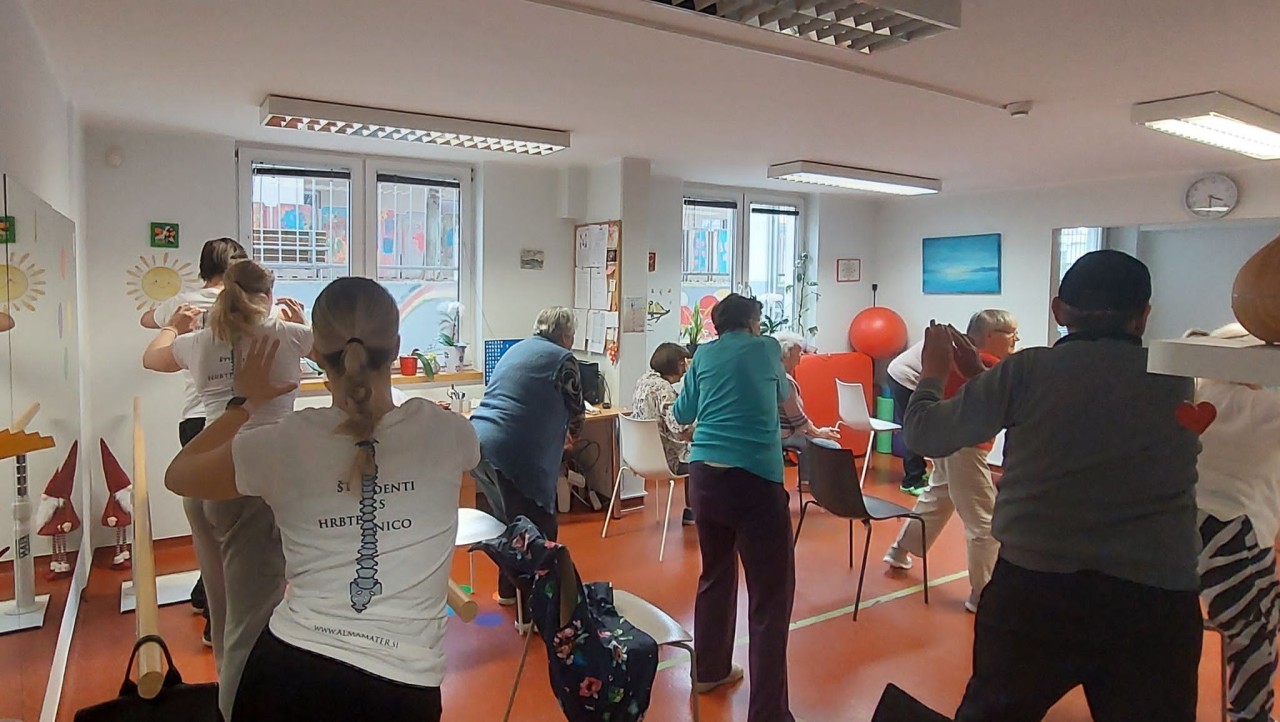
The research was conducted in two care homes for older adults: Dom Danice Vogrinec Maribor and SeneCura Dom starejših občanov Maribor. Both institutions followed the same guided Asahi exercise programme, which ran for five weeks in March and April. The programme comprised ten sessions, with exercise taking place twice per week.
Before the programme began, an introductory meeting was held at both homes with a physiotherapist or professional staff of the facility. At this meeting, the purpose of the programme was presented, along with the planned structure of the sessions, the method of monitoring participants' wellbeing and the procedure for the reach test.
Before each individual session, the facilitators recorded the current subjective state of each participant. Monitoring included a brief self-assessment of general wellbeing, physical wellbeing or the presence of physical complaints, and current energy levels. Scores were recorded on a monitoring form used throughout the five-week period. When providing ratings, facilitators could assist participants with additional explanation or visual aids as needed, but the rating was always given by the participant based on their own current experience.
Following the initial wellbeing assessment, a guided Asahi session lasting approximately 30 minutes took place. The exercise set comprised 12 movements. Exercises were performed in the same sequence each time, with an emphasis on slow, flowing and controlled movement, relaxed breathing and body awareness. Alongside the individual exercises, students also displayed the corresponding symbols, which served as an additional visual aid for participants in understanding and memorising the sequence of movements. Facilitators ensured throughout the session that the pace was appropriate for older participants and that sufficient transition time was allowed between exercises.
After the session, students recorded the self-assessments again. In this way, pre- and post-exercise data were collected for each session, enabling monitoring of any changes in wellbeing, physical condition and energy following individual sessions. After the post-session rating, a brief conversation with participants took place, during which they could share their impressions, any difficulties encountered with the exercises, feelings after the session or suggestions for adaptations. All relevant notes were recorded on the monitoring form.
In addition to regular wellbeing monitoring, a functional reach test was also conducted within the programme. The purpose of this measurement was to obtain an approximate assessment of balance, trunk stability and body control. The measurement was taken in the second week of the exercise programme and again at the penultimate session. During the test, the participant stood sideways beside a wall, with feet hip-width apart and heels flat on the floor. Knees were extended without active bending, and arms were extended forward at shoulder height. The initial position of the fingertips was marked; the participant then slowly leaned forward without taking a step, and the final position of the fingertips was marked. The difference between the starting and ending positions was measured. Both the initial and follow-up reach values were recorded on the form, and the difference between the two measurements was calculated.
At the final session, the exercise was followed by a closing segment of the programme. Facilitators thanked participants for their involvement, certificates and small tokens of appreciation were presented, and a brief evaluation in the form of a group conversation took place.
Drawing on the experiences and guidance gathered during conversations and sessions, we designed and produced a learning and motivational planner, which was distributed to all participants. It includes symbols with brief descriptions of the exercises and a colour-coded activation prompt.
Methods
Four methods were used for data collection: a wellbeing monitoring questionnaire administered before and after each session, the functional reach test, structured observation during sessions and brief conversations with participants. This combination enabled the collection of both quantitative and qualitative data on the progress and effects of the exercise programme. The questionnaire monitored participants' subjective assessment of general wellbeing, physical wellbeing and energy levels before and after each session, while the functional reach test assessed possible changes in mobility, balance and body stability. Observation allowed for the recording of participation, motivation, responsiveness and any difficulties in performing exercises, while conversations with participants provided additional information about their experience of the exercise, perceived changes and general impressions.
Wellbeing Monitoring Questionnaire contained basic information about the participant. The central section was designed to assess three dimensions of current subjective state. General wellbeing was rated on a five-point scale, where a score of 1 indicated very poor wellbeing and a score of 5 indicated very good wellbeing. Physical wellbeing was defined as the degree of perceived physical discomfort, such as pain, tension, fatigue or other physical limitations. It was rated on a four-point scale, where a higher score indicated more favourable physical wellbeing. Energy level was rated on a five-point scale, where a score of 1 indicated very low energy and a score of 5 indicated very high energy.
Functional Reach Test was designed to assess balance, trunk stability and body control. It is a simple field measurement that provides an approximate assessment of an individual's functional stability during a controlled forward shift of the body. The test measured the distance reached by the participant with arms extended during a forward lean, without moving the feet or losing balance. The result was expressed in centimetres. A higher reach value indicated better functional stability and greater body control, while a lower value suggested poorer stability and a greater risk of losing balance. Three reference categories were used for interpretation: a score below 15 cm indicated an increased risk of falls, a score between 15 and 25 cm indicated average stability, and a score of 25 cm or above indicated good stability. The test was included as a more objective complement to the subjective self-assessments of wellbeing, as it enabled monitoring of possible changes in participants' functional mobility and balance.
Observation During Exercise Sessions was used as a qualitative data collection method during the exercise sessions. It allowed us to monitor participants' engagement, their motivation, responsiveness to instructions, manner of integrating into the group and any difficulties encountered in performing individual exercises. Attention was also paid to the degree of independence in performing the exercises, the need for adaptations, fatigue, caution during movement and participants' overall engagement. We also monitored the incentives that influenced participation in the exercise, such as group belonging, praise, enjoyment, collaboration with young people, and the consistency of sessions at the same place and time.
Conversation with Participants was used as a qualitative data collection method. It was designed to gather additional information about participants' subjective experience of the exercise, their current wellbeing, impressions following individual sessions and any changes they had noticed in themselves. Conversations also provided data on motivations for physical activity, perceived barriers and incentives for continued participation. Participants cited as motivations: improved wellbeing, maintaining independence, socialising, overcoming boredom and concern for their health; and as incentives: a sense of progress, praise, group belonging and a sense of importance from contributing to the students' learning process.
Data Processing and Analysis of Results
Data collected during the Asahi exercise programme were analysed using both quantitative and qualitative methods. The analysis drew on results from the wellbeing monitoring questionnaires, the functional reach test, structured observation during sessions and conversations with participants. The combination of different data collection methods enabled a more comprehensive assessment of the impact of Asahi exercise on subjective wellbeing, energy levels, physical condition and the functional capacities of older adults.
Table 1: Average values of wellbeing, physical wellbeing and energy before and after exercise by care home, for the period 2 March 2026 – 2 April 2026
Home | N | Average age | General wellbeing pred | General wellbeing po | Physical wellbeing pred | Physical wellbeing po | Energy before | Energy after |
Home DV | 9 | 79,44 | 4,09 | 4,60 | 2,54 | 2,68 | 3,98 | 4,44 |
SeneCura | 9 | 78,11 | 3,53 | 4,20 | 2,29 | 2,39 | 3,28 | 3,75 |
Total | 18 | 78,78 | 3,81 | 4,40 | 2,42 | 2,54 | 3,63 | 4,10 |
The combined average for both homes (Table 1) shows that participants had a mean age of 78.78 years. General wellbeing increased after exercise from 3.81 to 4.40, physical wellbeing from 2.42 to 2.54, and energy from 3.63 to 4.10. The results of the wellbeing measurements thus show that participants reported, on average, better general wellbeing, slightly improved physical wellbeing and higher energy levels after exercise. The greatest change was observed in general wellbeing and energy, while changes in physical wellbeing were less pronounced. Based on the results presented, it can be concluded that the exercise had a positive short-term effect on participants' wellbeing in both homes. The effect was particularly noticeable in general wellbeing and energy, meaning participants felt better and more energetic after the activity than before.
Table 2: Average results at the first and second measurement of the functional reach test
Home | 1st measurement | 2nd measurement | Difference |
Home DV | 24,33 cm | 27,11 cm | +2,78 cm |
SeneCura | 18,83 cm | 20,24 cm | +1,41 cm |
Total | 21,58 cm | 23,68 cm | +2,10 cm |
The combined average for both homes (Table 2) was 21.58 cm at the first functional reach measurement and 23.68 cm at the second. The overall improvement was 2.10 cm. Both combined values fall within the range of average stability; however, the post-exercise result is higher and closer to the threshold for good stability. This indicates that the exercise programme contributed to an improvement in participants' functional reach.
The results of the functional reach test thus show positive progress in both homes. The improvement was somewhat more pronounced among participants at Dom Danice Vogrinec, where the average post-exercise result fell within the range of good stability. Among participants at the SeneCura home, the improvement was smaller but still indicated better balance and stability. Overall, the results suggest that the exercise positively influenced the functional capacity of participants, especially their stability, balance and body control.
During observation and conversations with participants, additional qualitative data were gathered on motivations, barriers and incentives for participation in the exercise. The most frequently cited motivations for physical activity were the desire for improved wellbeing and the maintenance of physical capacity,
independence and health.
Socialising, overcoming boredom and the sense of contributing to better everyday quality of life – for example, moving more easily around the home, climbing stairs or taking part in communal activities – were also important motivations. Some participants also highlighted curiosity, a more youthful appearance and the desire to remain self-sufficient for as long as possible.
The most common barriers to physical activity included poor wellbeing, pain, lack of energy, depressive mood and the feeling that they could not manage the exercise or that it was too demanding for them. In some participants, a lower awareness of the benefits of physical activity or the belief that they were too old to exercise was also noticeable. Important incentives included a sense of group belonging, praise, a feeling of progress, enjoyment, collaboration with young people and the consistent organisation of sessions at the same place and time. Participants also experienced a positive sense of importance, as by participating in the exercise they contributed to the students’ research and learning process. These qualitative findings complement the quantitative results, showing that the exercise represented not only physical activity for participants but also social, motivational and psychological support.
Findings and Conclusions
The research results showed that Asahi exercise had a positive effect on subjective wellbeing, energy levels and the functional abilities of participants in both homes. In both groups, general wellbeing, physical wellbeing and energy improved after the exercise, indicating a positive short-term effect of the sessions on participants’ immediate experience of their wellbeing. The functional reach test also showed positive progress in both homes.
The research results confirm the hypotheses regarding the effects of regular Asahi exercise and the assumption that participants would experience it as a pleasant, safe and appropriate form of physical activity. During conversations, participants often expressed satisfaction with the exercise and noticed positive changes in their wellbeing and movement. It was evident that participants were motivated to attend the exercise not only by its physical effects but also by the social and psychological aspects of participation in the programme. As important motivations motivations for participation, they cited improved wellbeing, maintaining mobility and independence, socialising and overcoming loneliness. Some also emphasised the importance of movement for maintaining vitality, a sense of youth and self-confidence. During sessions it was evident that participants felt accepted and included in the group, which had a significant effect on their sense of belonging, connectedness and mutual support. Participants encouraged one another and gradually became more confident in performing the exercises.
Particular value was also found in collaboration with young people, as intergenerational exchange gave older adults a sense of importance and active inclusion in society. Among many participants, satisfaction with perceived physical progress and greater confidence in movement was evident.
Despite the positive effects, certain barriers. Some participants occasionally reported poor wellbeing, pain, fatigue, lack of energy and dizziness, which affected their ability to participate in individual sessions. In some cases, poor weather or a participant's current health status also affected regular attendance.
The research results can be assessed as moderately reliable, as data were systematically collected throughout the entire programme using questionnaires, the functional reach test, observation and conversations with participants. The combination of different data collection methods enabled a more comprehensive insight into the effects of the exercise and increased the credibility of the results, while additional value was provided by the direct monitoring of participants’ actual engagement in the exercise. Nevertheless, the research has certain limitations. A relatively small number of participants were included in the study, and the programme lasted only five weeks, which means that the results cannot be fully generalised to the wider population of older adults. Part of the data is also based on participants’ subjective self-assessment, which may be influenced by their current mood, health status or attitude toward the exercise. Despite these limitations, the research results represent an important insight into the positive effects of adapted Asahi exercise for older adults in institutional care.
Conclusions and Recommendations for Future Work
Based on the guided Asahi exercise programme implemented in both homes, we can conclude that the exercise was well received, safely delivered and comparable in structure, which ensured uniform working conditions and reliable monitoring of results. Participants reported stable or improved wellbeing after exercise, as well as higher energy levels and better subjective physical wellbeing. The functional reach test showed small improvements or maintenance of the initial state, indicating the potential of exercise to help maintain balance and functional abilities in older adults. Observation and conversations with participants additionally revealed high motivation, good acceptance of the exercise and a sense of safety, which was supported by the possibility of adapting movements to individual abilities. Group dynamics and the support of the facilitators significantly contributed to regular participation and an overall positive experience of the programme.
For future work, it would be worthwhile to extend the Asahi exercise programme over a longer period of time, as this would allow for more pronounced and long-term effects. It would also be advisable to include a larger number of participants from more care homes, which would allow the benefits of the exercise to reach a broader group of older adults,while at the same time increasing the representativeness of the results. In the future, it would be beneficial to add objective measures, such as walking speed or the Timed Up and Go test, which would allow for a better assessment of functional changes and provide participants with recognisable progress as additional motivation.
Drawing on all the insights gained, we designed and produced a learning and motivational tool, which was distributed to participants. It will contribute to a better understanding of the exercises and motivate them to perform them regularly. The results and experiences gained during the project enriched and inspired us to further develop approaches for promoting physical activity in all generations.
REFERENCES
Asahi Nordic Institute. Asahi – a fitness program that cares for your body and mind. Asahi World
Anton Trstenjak Institute. (2013). Ageing in Slovenia.
Institute for Health Metrics and Evaluation. (2021). Global Burden of Disease Study.
Koraki k zdravju. (2022).
Ličen, N., et al. (2025). Always Curious.
NIJZ. (2025). vAdBeCeDa and ABC+ programmes.
Nordic Health Institute. (n.d.). The main principles of Asahi.
Rupnik Vec, T. (2024). Discovering Who I Am and Enjoying It.
staranje.si. (2025). Active and Healthy Ageing.
University of Ljubljana. (2025). Contributions: What Is the Significance of the Concept of Active Ageing.
World Health Organization. (2020). WHO guidelines on physical activity.
Žunko, N., et al. (2012). Never Too Old to Learn.
Find the original document here.

Categories: : Asahi & Osteoarthritis, Asahi & Physical Therapy, Asahi and Chronic Neck Pain, Asahi and Exercise Physiology, Asahi and Joint Pain, Asahi and Sociality, Asahi Around the World, Asahi as Physical Rehab, Asahi keeps you young, Asahi Nordic for a lifetime, Asahi Nordic for All, Slovenia, Zavod Eno