From Wheelchair to A-level Asahi Instructor
 Asahi Nordic Institute
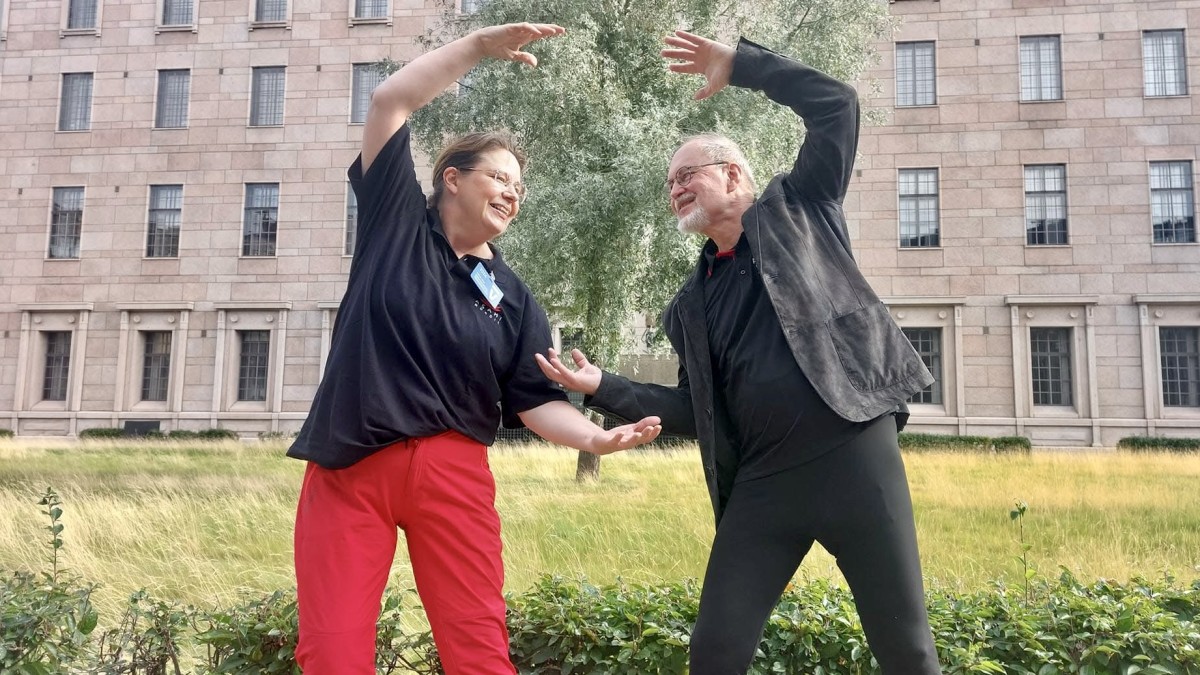
Severe ankylosing spondylitis (AS) put Mikael Karring into a wheelchair in 2010. With Asahi he regained mobility and also gained a new outlook on life
If someone had told me ten years ago that I would become an Asahi
instructor…
I would never have believed it.
Not because I didn’t want to move—
but because my world didn’t really look like that would be possible anymore.
We rarely hear the words person with mobility limitations and health exercise instructor in the same sentence.
Or if these appear in the same sentence, it raises questions, perhaps even doubts.
So how did I end up becoming an Asahi instructor?
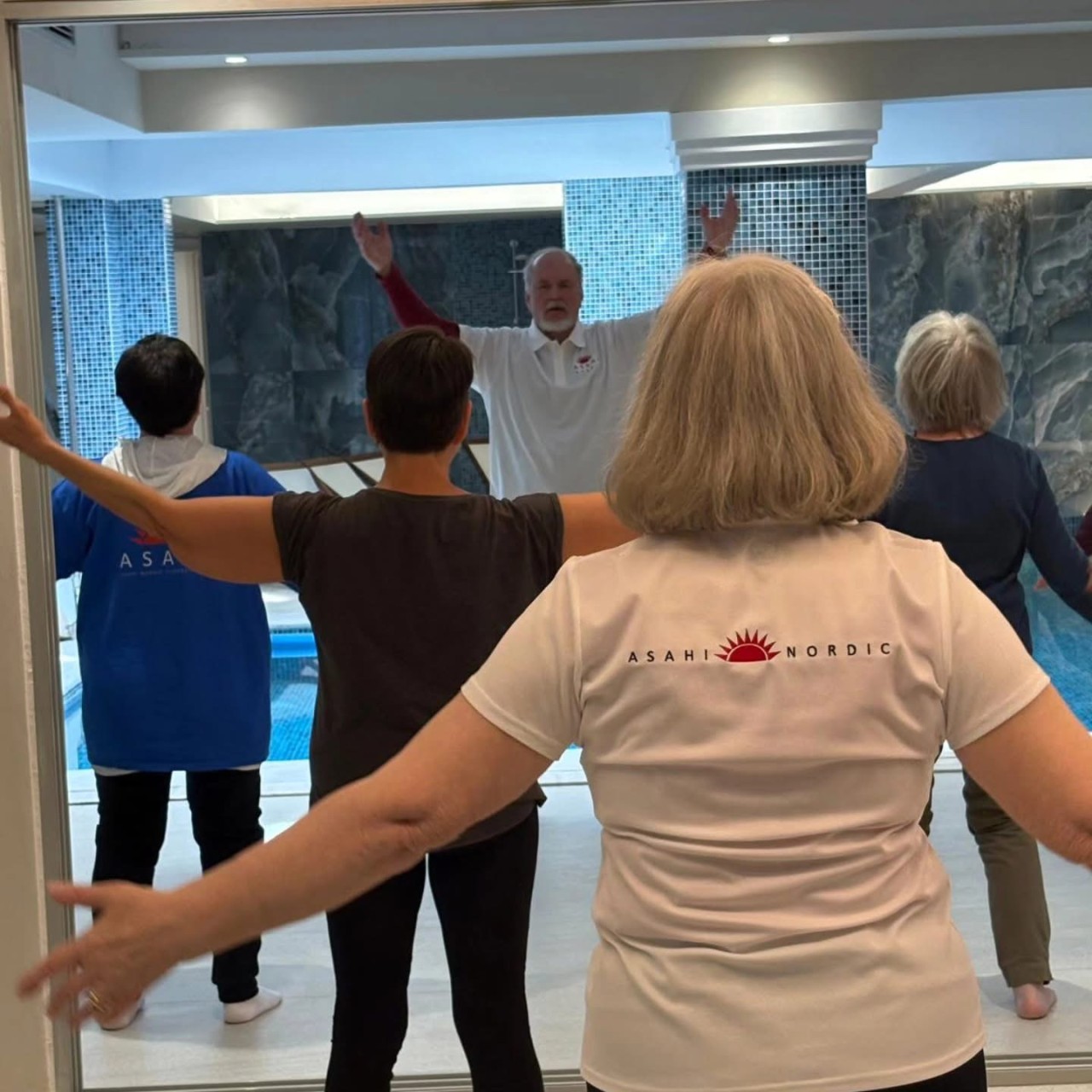
Mikael leading an Asahi practice during an Asahi Week in Nea Makri, Greece, in 2025
I am over 70 years old, but already at the age of 20, I was diagnosed with severe ankylosing spondylitis (spondyloarthropathy) which is a chronic, inflammatory autoimmune disease—a type of axial spondyloarthritis—that causes spinal joints to fuse, leading to severe stiffness, pain, and reduced mobility.
A little about my professional background: I graduated as a veterinarian in 1981 and I am a specialist in infectious diseases as well as public health sciences.
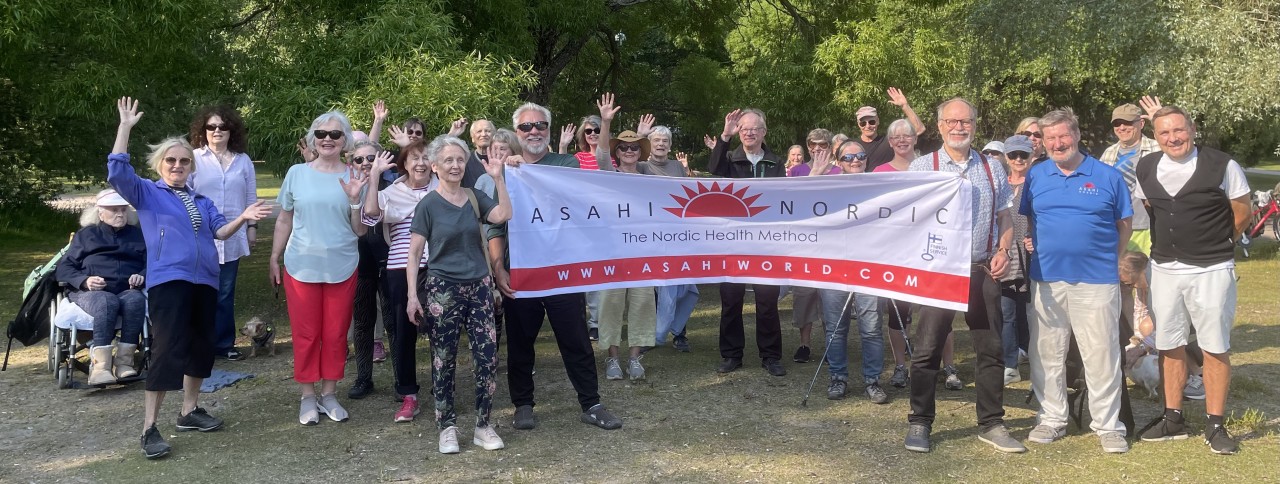
Mikael in 2023 holding the banner on the right at Dr. Mähönen's famous year-round outdoor Asahi class on Wednesdays at 5 pm at the Kasino Beach Park in Lauttasaari, Helsinki
I have practiced Chinese medicine for years, completed an international acupuncture qualification, and helped found the World Association of Traditional Chinese Veterinary Medicine, where I served on the board for over ten years.
I became interested in studying Zen meditation, and the concept of the empty mind, and I completed Leena Pennanen’s mindfulness instructor training. Leena Pennanen introduced mindfulness to Finland in the early 1980’s. This helped me deal with unpleasant sensations, although many times I thought I could no longer endure severe pain.
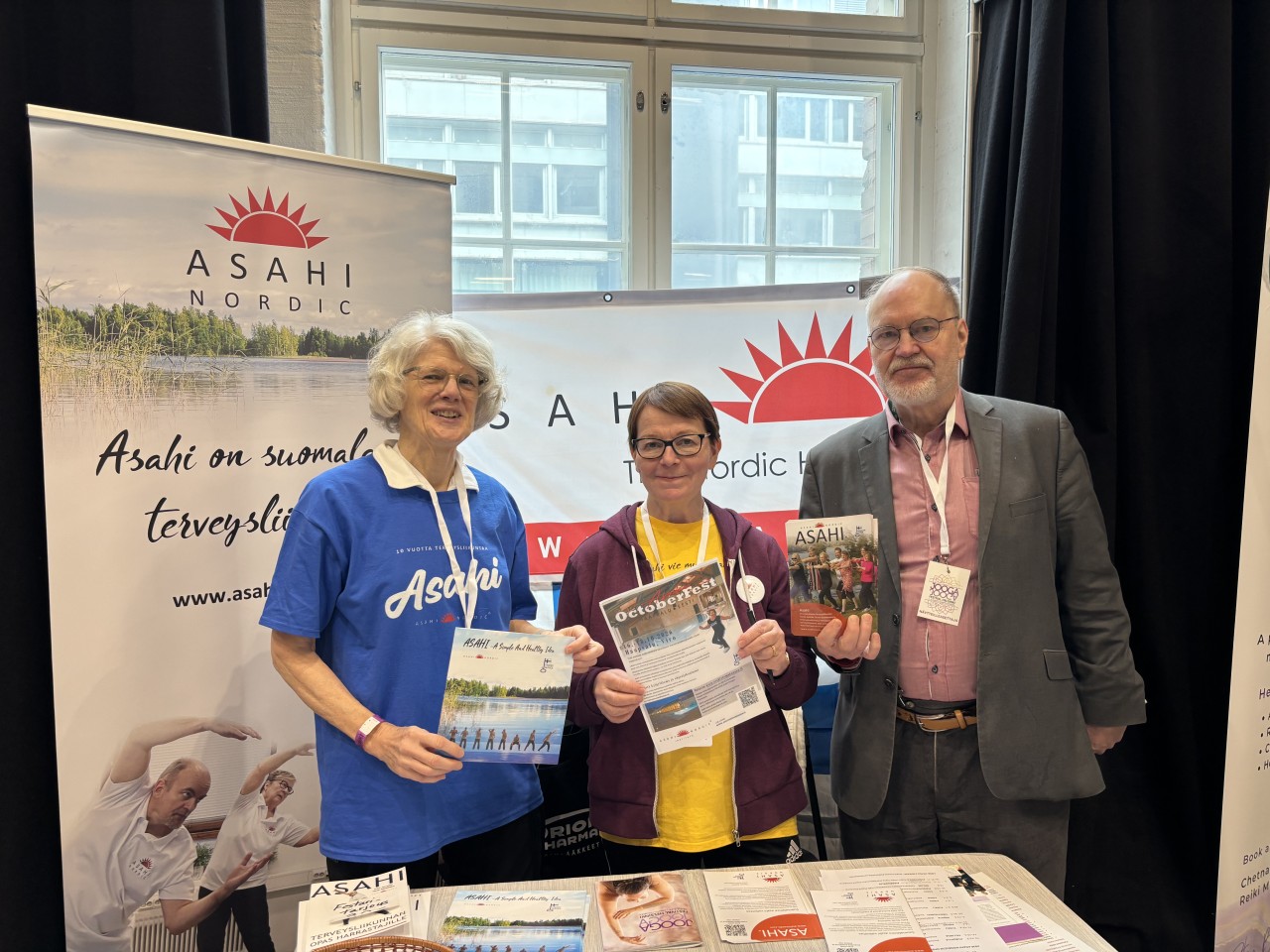
Mikael with Margaret Vainio and Merja Aho, promoting Asahi Nordic at the Helsinki Yoga Festival in March 2026
Little by little I learned that even with pain, there can still be quality of life—loving-kindness, as Widyamala Burch teaches. I remember the trainings well: while others sat through lectures, I often had to lie down and rest.
“Take a break before you need it.”
The concept of mindful movement.
“Rest in gravity.”
An exercise:
Clench your hand into a fist—what does it feel like when you hold your breath?
Then compare it to making a fist while breathing. The tension eases.
Pain is the same way.
It is not a permanent, fixed state, but a moving sensation.
You can either fight it, or accept it.
Keep it simple:
Instead of thinking,
“I don’t like this.”
“I don’t want these sensations.”
Feel what is happening right now.
Investigate what happens right now.
When we studied Chinese medicine in China and Taiwan, we always began at dawn with Tai Chi.
My illness worsened, and in the early 2010’s I was bedridden.
I spent long periods in rheumatological and rehabilitation hospitals, underwent
several neurosurgical spine operations, and later used a wheelchair and had a
disability parking permit.
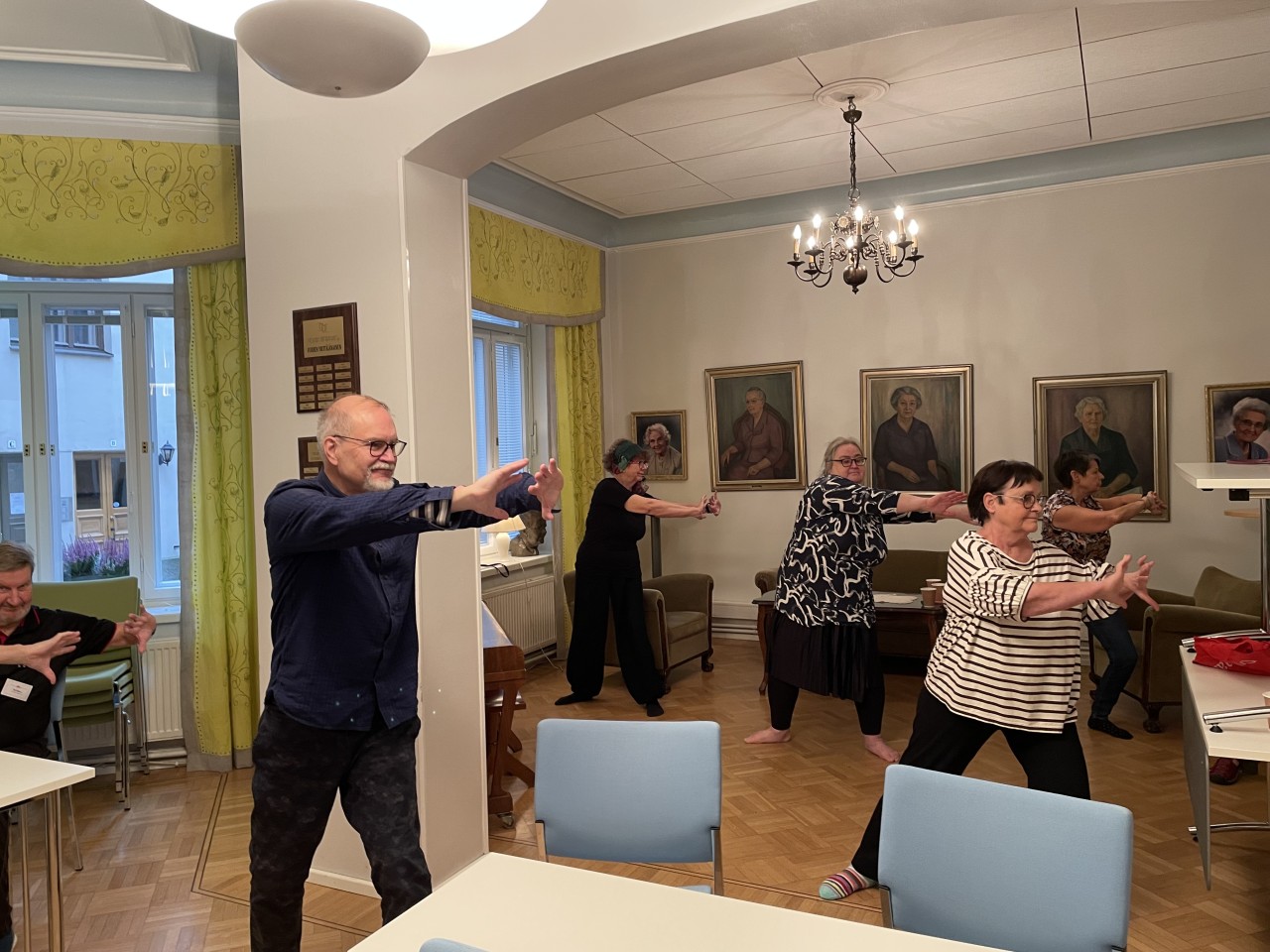
Participating in an Asahi Health Day in Helsinki in 2022.
About fifteen years ago, during a stay in a rehabilitation hospital, I was introduced to Asahi. I got an Asahi DVD, studied the literature, and began exploring what Asahi is. The slow, pumping movements done flowingly in rhythm with the breath reminded me of Tai Chi—mindful movement and awareness of gravity and center of balance, which I had practiced for earlier.
Now I want to tell you what Asahi has taught me.
As you know, for a person with mobility limitations, things take
more time, more planning—
and sometimes more courage.
But over time you learn something important:
Not everything has to be done the same way as others do it.
It is enough to find a way that works for you.
Still, for a long time I thought…
exercise no longer really belonged to me.
That, at most, maybe I could be a participant, but never an instructor.
Then something unexpected happened.
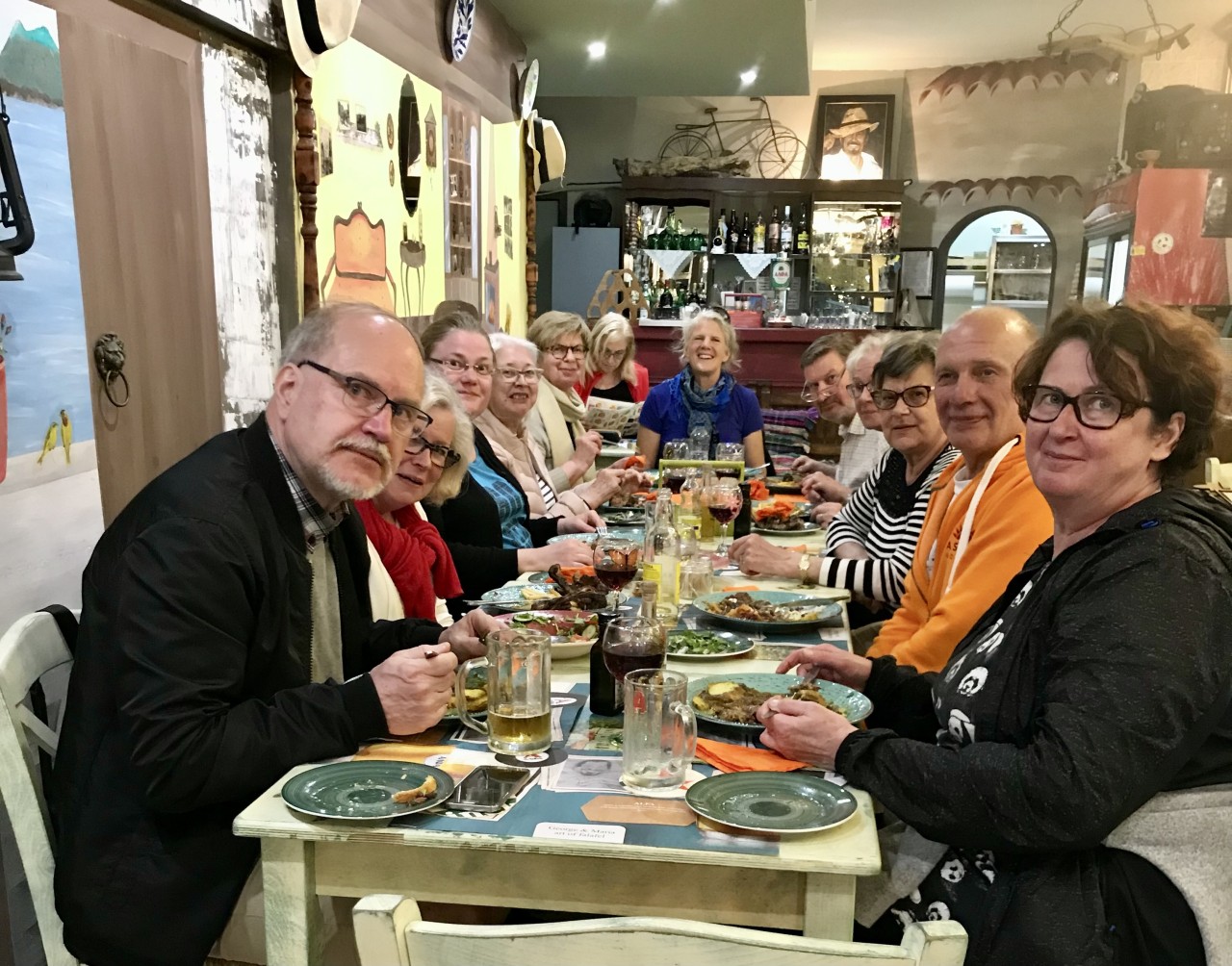
Mikael has participated in almost all the Asahi Nordic Weeks in Greece, where one can enjoy the Mediterranean cuisine and the sun, as well as the Asahi practices outdoors under the palm trees!
On the 2019 trip to Rhodes, I decided to attend the C-level instructor training, held at the apartment of Margaret Vainio, who was working in Rhodes at that time.
The experience was encouraging.
Not because Asahi was demanding…
but because it was peaceful.
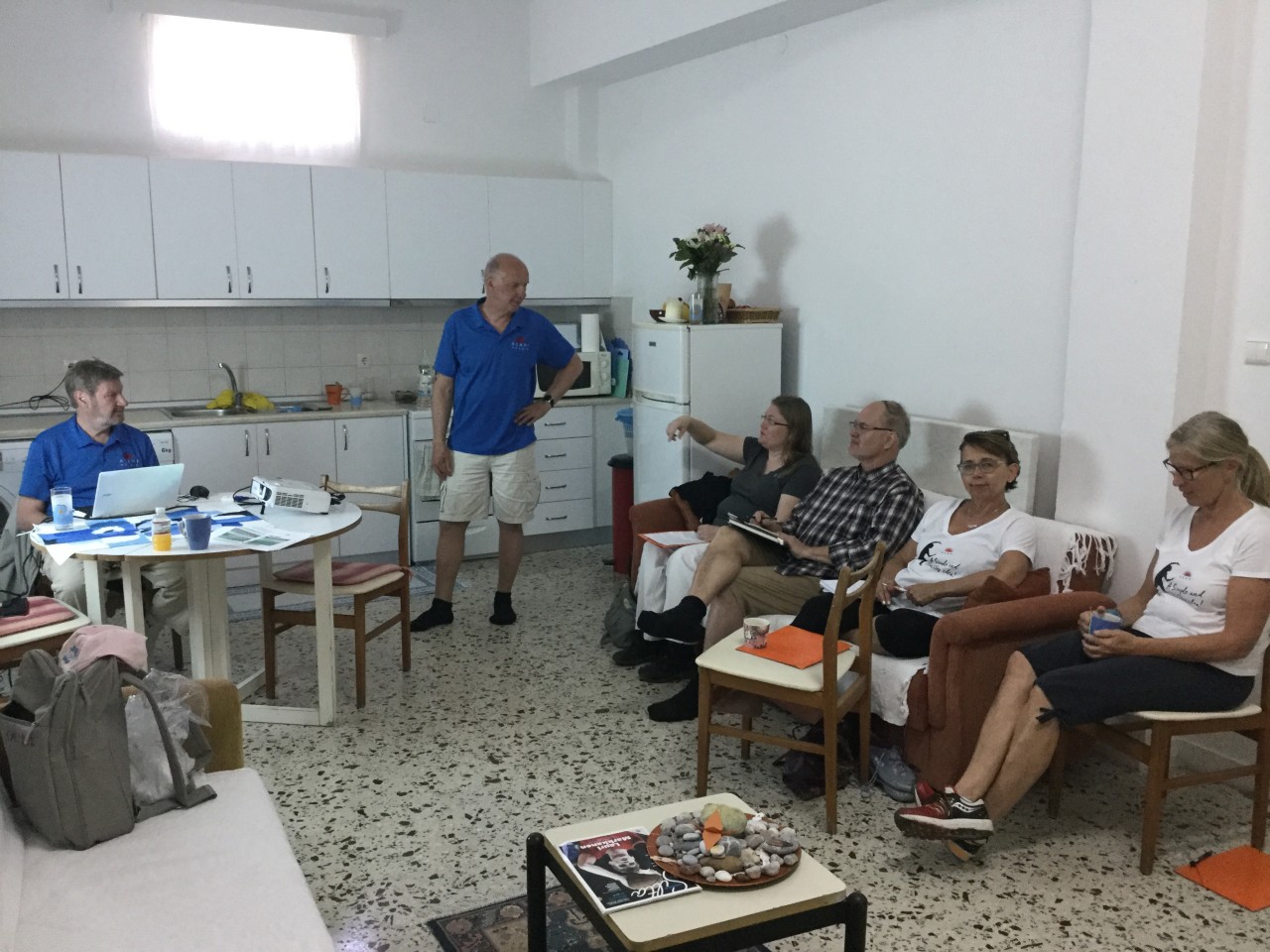
Mikael participating in his first teacher training with Ilpo Jalamo and Dr. Yrjö Mähönen in Rhodes, Greece in 2019.
Slow speech.
Soft, pumping movement.
Breathing in rhythm.
Listening to the body.
I did not feel like an outsider in movement—quite the opposite.
And then a thought quietly began to emerge…
What if one day I could teach this?
It didn’t happen all at once. I reflected on it for a long time.
And the thought grew little by little.
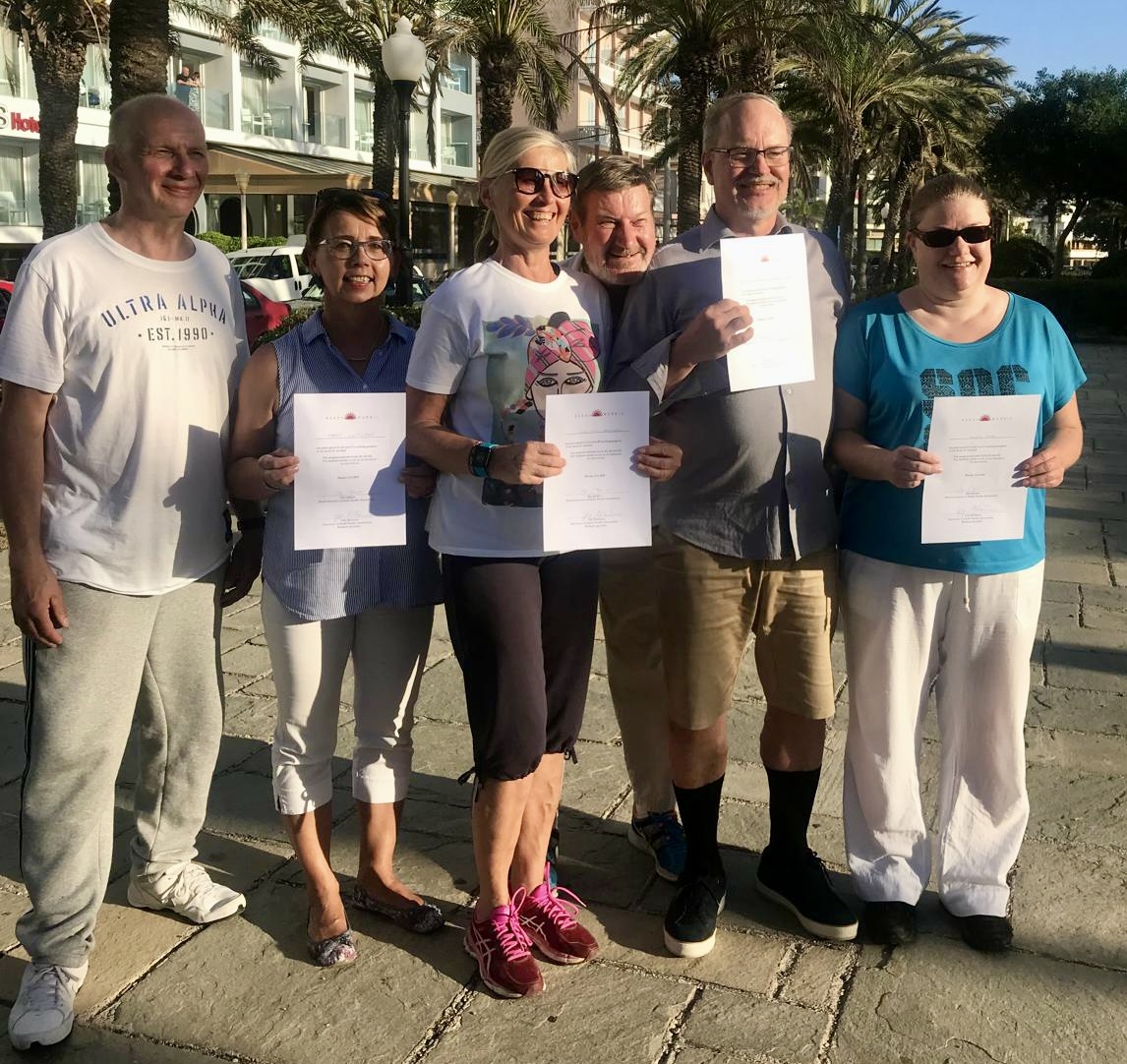
The happy 2019 Rhodes graduating class: Ilpo Jalamo (instructor and developer of Asahi), Maarit Lintukorpi (C-level then, but A2 level and one of the five Asahi Nordic Institute head trainers), Ulla Roth (B-level, who continues to hold regular Asahi classes in Rhodes every week), Dr Yrjö Mähönen (instructor and developer of Asahi), and new C-instructors Mikael Karring (C-level) and Margita Slätis.
Could I do this?
What would others think?
What if I am not enough?
What if I don’t have the strength?
And perhaps the biggest question:
Do I dare to try?
There were obstacles along the way.
Some were physical—
How do I adapt the movements?
How do I demonstrate them?
How do I guide a body that functions differently?
But, honestly, many of the obstacles were mental, for example, the chronic fatigue caused by long-term pain!!!
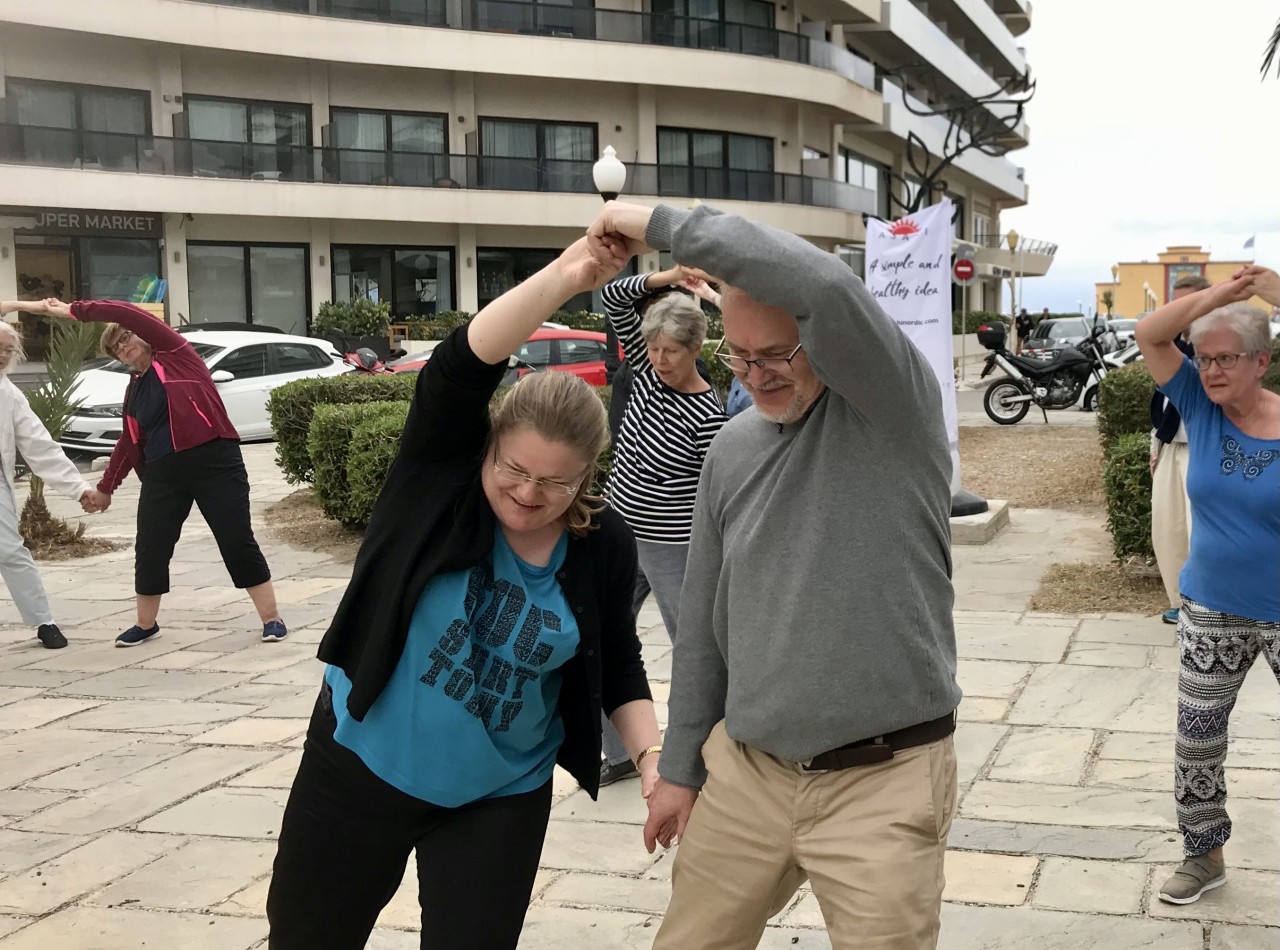
Practicing ways to do Asahi in pairs. This photo was taken during Rhodes Asahi Week in 2019
But with every obstacle, a solution appeared.
I learned to look at movement differently.
Not as a model to copy—
but more as a principle.
If the body doesn’t move like in a textbook,
it can still move correctly.
And the most important insight:
I do not have to be
the same kind of instructor as others…
…to be a good instructor.
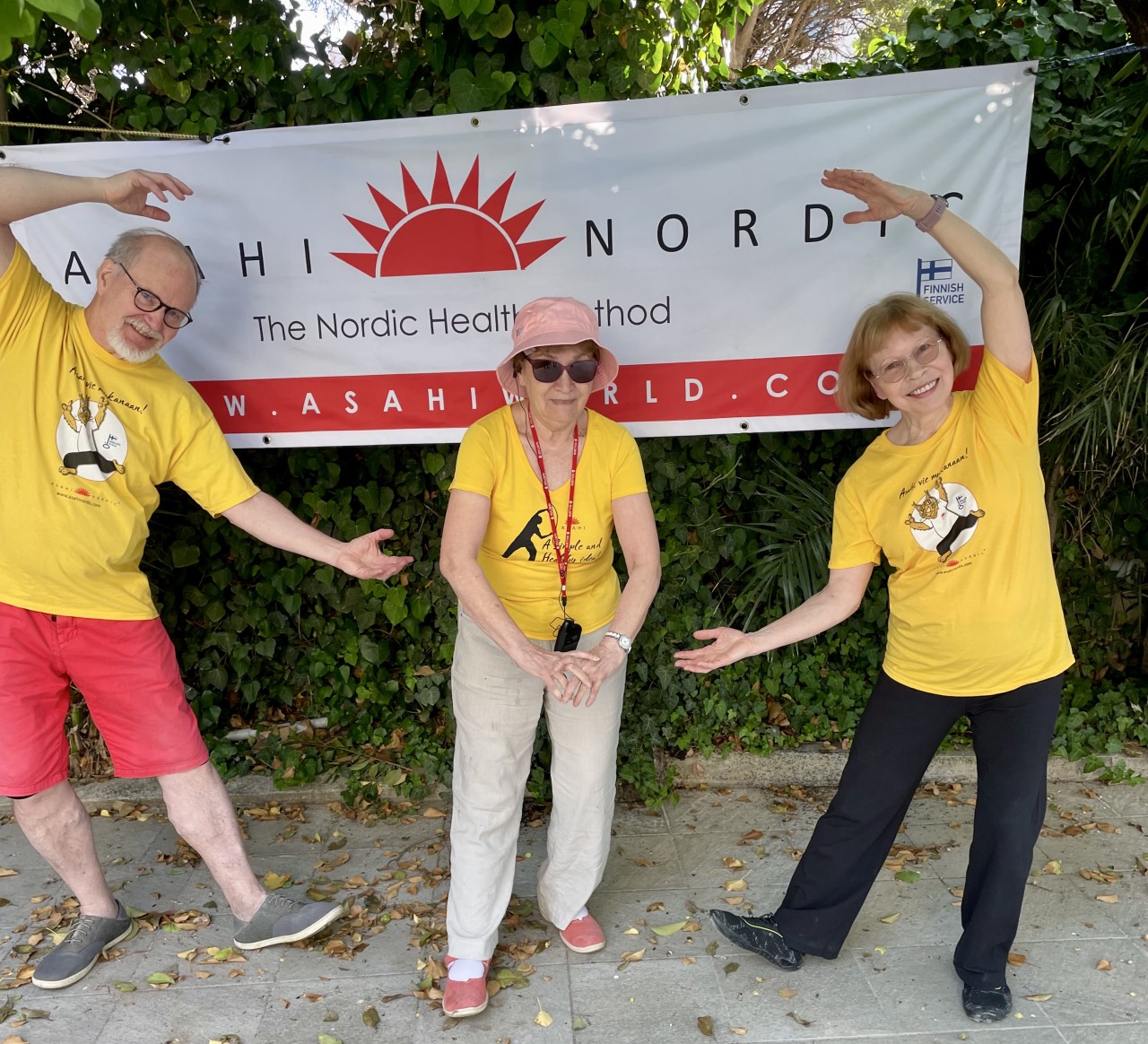
Mikael has participated in all the Asahi Week trips to Greece. This photo is from Nea Makri, Greece, in April 2025
During the training something significant happened.
I was no longer the one who only participates.
I had become the one who guides.
It changed something deep inside.
It changed the way I see myself.
This journey has taught me:
Movement is not only for the body.
It is also for the mind.
For identity.
For belonging.
It has also taught me that small movements…
can be big things.
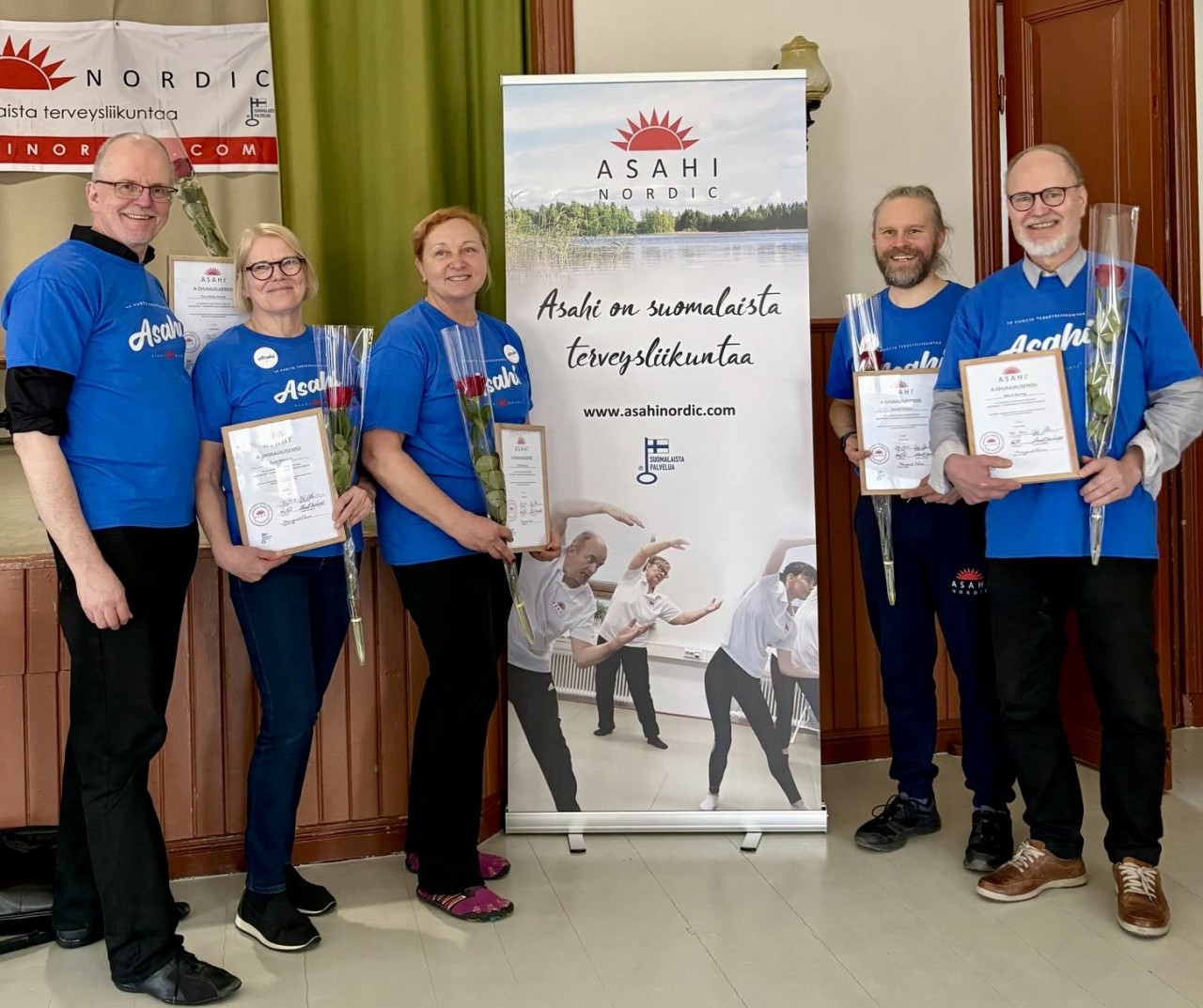
Graduation as an A-level Asahi teacher in April 2025, along with Tero-Pekka Henell, Tuula Riikonen, Ülle Heiskanen, Samuli Viitanen, Mikael Karring (and Maini Schildt, missing from the photo)
And above all it has taught me that roles are not fixed.
The one who is used to staying on the sidelines can step forward.
The one who is used to following can begin to guide.
And that is why I want to say this:
Movement belongs to everyone.
But the question is not
whether a person with mobility limitations can teach —
but whether we give them the opportunity
This is Asahi:
Not performance.
Not comparison.
But moving from your own starting point.
When the movements are done slowly,
it gives you time to really listen to your body and mind.
And that is exactly why it also changed the direction of my life.
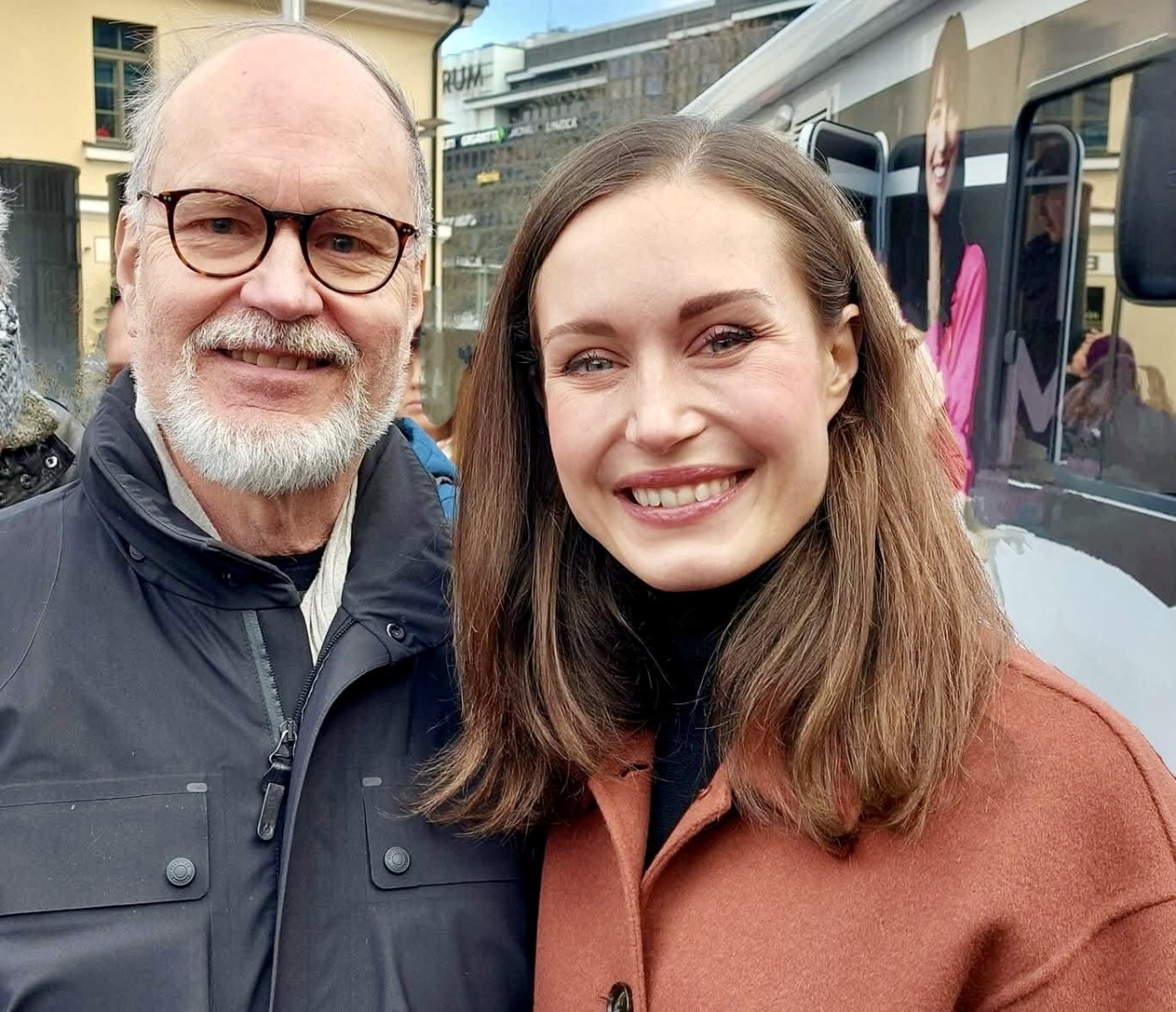
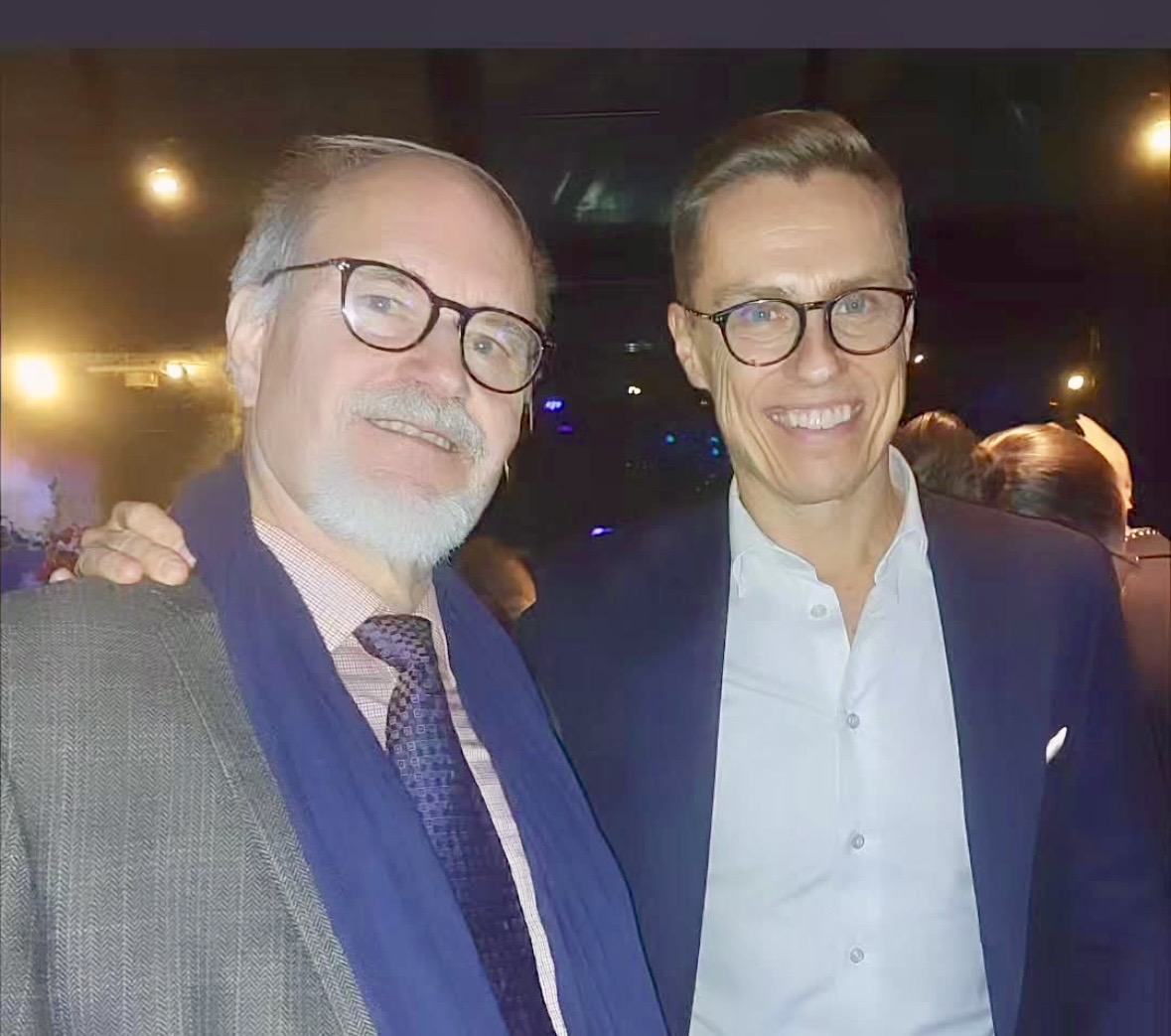
Mikael's involvement in politics brings him in contact with many Finnish leaders, such as Finland's former Prime Minister Sanna Marin and the current President Alexander Stubb
Categories: : Asahi & Ankylosing Spondylitis (AS), Asahi & Chronic Pain, Asahi and Finnish Sisu, Asahi as Physical Rehab, Asahi in Life Crises, Asahi keeps you young, Asahi Nordic for a lifetime, Asahi teachers' close-ups