Asahi and Menopause: Navigating the Change
 Asahi Nordic Institute
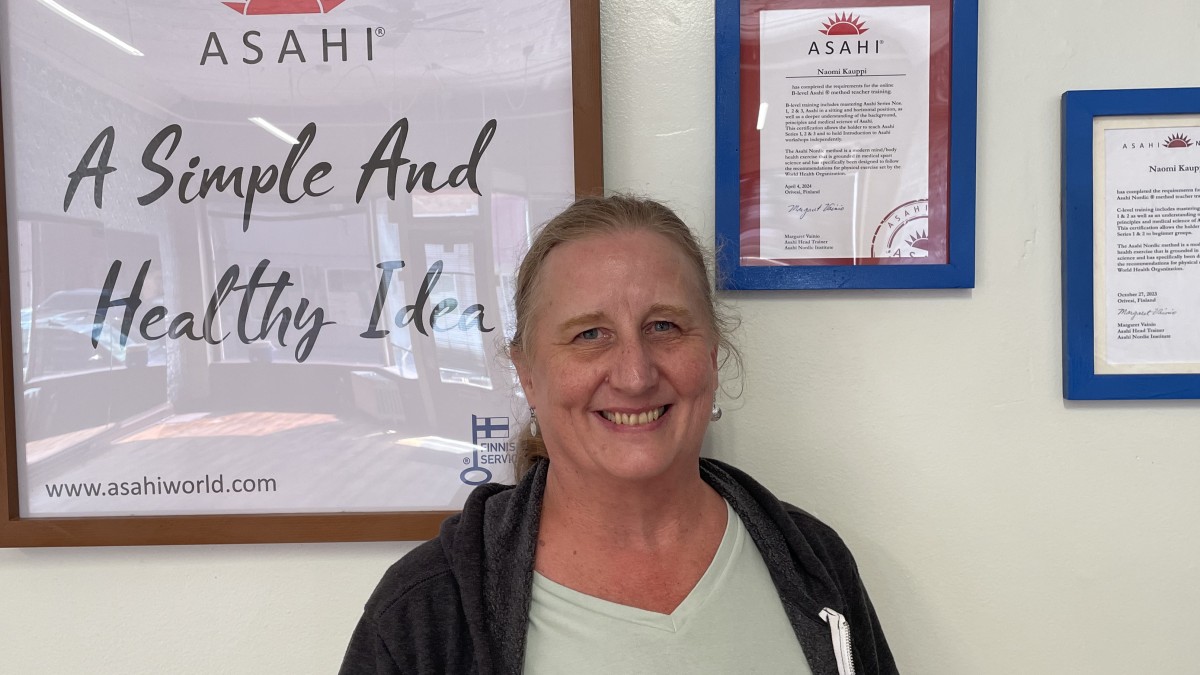
Asahi Teacher Trainer Naomi Kauppi discusses the possible benefits of Asahi Nordic mind-body method for women in menopause.
Navigating the Change: Asahi and Menopause
By: Naomi J. Kauppi
I. Introduction
As a person with ovaries ages, her ovaries will slowly stop producing estrogen hormones.
Along with stopping monthly periods, the decrease in estrogen hormones may cause various symptoms to appear. No two women will have the same symptoms. Some women experience vasomotor reactions (hot flashes), muscular/skeletal anomalies (joint pain), metabolic imbalances (weight gain, especially around the midsection), coronary discomfort (heart palpitations orfeelings of a racing heart), emotional dysregulation (depression), neurological symptoms (brain fog), other hormonal imbalances (disrupted sleep), just to name a few. As it turns out, estrogen hormones are a powerful protector and when its presence is lowered, the body feels the effects.
A woman can feel like the life in her body that she once knew is suddenly gone. Undoubtedly, her body is different. Fortunately, creating a new relationship with her changed body is possible.
A very effective tool in adapting to this changed body is found in mind-body health practices, specifically the practice found in Asahi.
II. What is Menopause?
Menopause officially occurs when twelve months have elapsed from when a woman has had her last menstrual period. It is the end of a woman’s reproductive time of her life.
Perimenopause is the time during which estrogen hormones production begins to decrease and menopause symptoms can begin to appear. After menopause, a woman is post-menopausal and the symptoms of menopause continue. It is a matter of debate whether the symptoms actually lessen and go away over time, or if a woman learns how to manage the symptoms for an overall better feeling in life.
There are other ways to menopause. A woman who has had her ovaries removed will also feel the symptoms of menopause. Chemotherapy can also initiate menopause.
III. The effects of lower estrogen and how Asahi can help
As the estrogen hormones decline during perimenopause, these changes can have effects throughout the body that impact every part of a woman’s life. There are at least 5 primary estrogen hormones and numerous secondary estrogen hormones, some of which we still do not know how they interact with the body.
A. The “Hot Flash”
One of the most common symptoms of menopause is a vasomotor reaction that originates in the hypothalamus part of the brain: the hot flash, also known as the hot flush since the discomfort can last longer than a “flash.” The hypothalamus, or body temperature regulator, gets its signals crossed. The body breaks out into sweat, the heart can start to race, and the face gets flushed. Hot flashes frequently happen at night when estrogen hormones are at their lowest. Disrupted sleep is the result.
Because estrogen hormones have a calming effect on the body, certain stressors can also cause a hot flash. Sometimes a woman can pinpoint to a stressor that can bring on a hot flash: spicy food, a stressful situation, or even a stressful thought.
Asahi is a comprehensive mind-body health exercise that is effective at moderating the frequency and severity of the hot flash. An Asahi practitioner focuses her attention on her own body to immerse herself in how her body feels at the moment. She uses slow movements and focused breathing to be in a state of awareness and without judgment. By doing Asahi on a regular basis, she can practice the mindfulness part of Asahi that helps to lower stress. This can help with hot flash.
B. Sore, stiff joints
Estrogen receptors are found in the joints of the body and when estrogen decreases, the result can be joint pain and stiffness for some women. It then becomes difficult to exercise, or even to attend to the basic duties of daily living when it hurts to get up and move. A woman may then see weight gain, muscle loss, and, consequently, may lose valuable self-esteem. Two of the most effective parts of the Asahi practice are the pumping and spiraling actions that are two of the basic techniques of Asahi. The pumping action pushes blood deep into the joints to nourish the joint while lymph is pushed out, removing waste and decreasing inflammation. The spiral actions also increase movement of the lymphatic fluids, flooding the joints with good fluids and removing waste. Both of these actions increase the repair and re-build functions in our joints.
By integrating these Asahi techniques, a woman can reduce the pain and stiffness in her joints, allowing her to do the daily tasks of her life. Perhaps it is possible to envision, again, growing older without pain.
C. Cardiovascular health
Estrogen hormones also protect a woman’s cardiovascular health. During her reproductive years, women enjoy a lower risk of cardiovascular disease. With estrogen hormones declining, there can be increased inflamation which can affect the heart, higher blood pressure, increased stiffness in the arteries, and higher LDL and lower HDL cholesterol.
One of the possible symptoms of menopause is the increase in cholesterol andtriglycerides. Anecdotal commentary from many students of Asahi and of this writer is that, with no other changes to one’s lifestyle except for the addition of Asahi, doctors are impressed with the reduction of blood cholesterol levels with a consistent Asahi practice. It would be great to do research in this area.
D. Bone density and bone health
Postmenopausal women also see a decrease in bone density. Estrogen hormones assist in the building up of bones and bone density. After menopause, women are at risk for lower bone density, and, consequently, there is a higher risk for osteoporosis.
Asahi’s bone-building exercises in Series Two include quick movements designed to irritate the bone and surrounding muscles fibers and nerves. These actions stimulate bone growth and repair. Where at one time a woman’s body was utilizing estrogen for bone growth and repair, she can now supplement her body’s bone repair plan with actions of her own.
E. Brain health and cognitive decline
Hormonal shifts in menopause can also have the features of forgetfulness and brain fog. These can also be exacerbated by poor sleep, mood changes, and hot flashes. The result is that a woman can feel as though she is isolated and alone.
Attending an Asahi class can help to reduce the isolating feature of actively experiencing the symptoms of menopause. When one feels as though she no longer experiences life the way that she used to, it is common to feel isolated and alone. Being in a group and sharing the experience of Asahi can help one feel connected and less alone. In addition, Asahi is non-competitive by design, so one does not need to compete with others to gain the benefits of Asahi.
Staying socially connected is one of the best ways to feel like yourself again, and to help alleviate the brain fog. An Asahi group can be a lifesaver for some people.
IV. Conclusion
Menopause is a transition into a new way of experiencing life. While no longer having monthly periods is freeing, in and of itself, for many women, this freedom comes with disrupted sleep, weight gain, and joint pain. Regular exercise is one of the most powerful tools that a woman has to adjust to her changing body. By adopting Asahi as a regular part of a woman’s health practice, a woman can care for herself in a way that promotes a positive sense of self while also caring for her cardiovascular health, bone health, mental health, and all of the myriad waysthat exercise and movement can benefit her. Let’s Asahi!!
By:
Naomi J. Kauppi
Asahi A-1 student
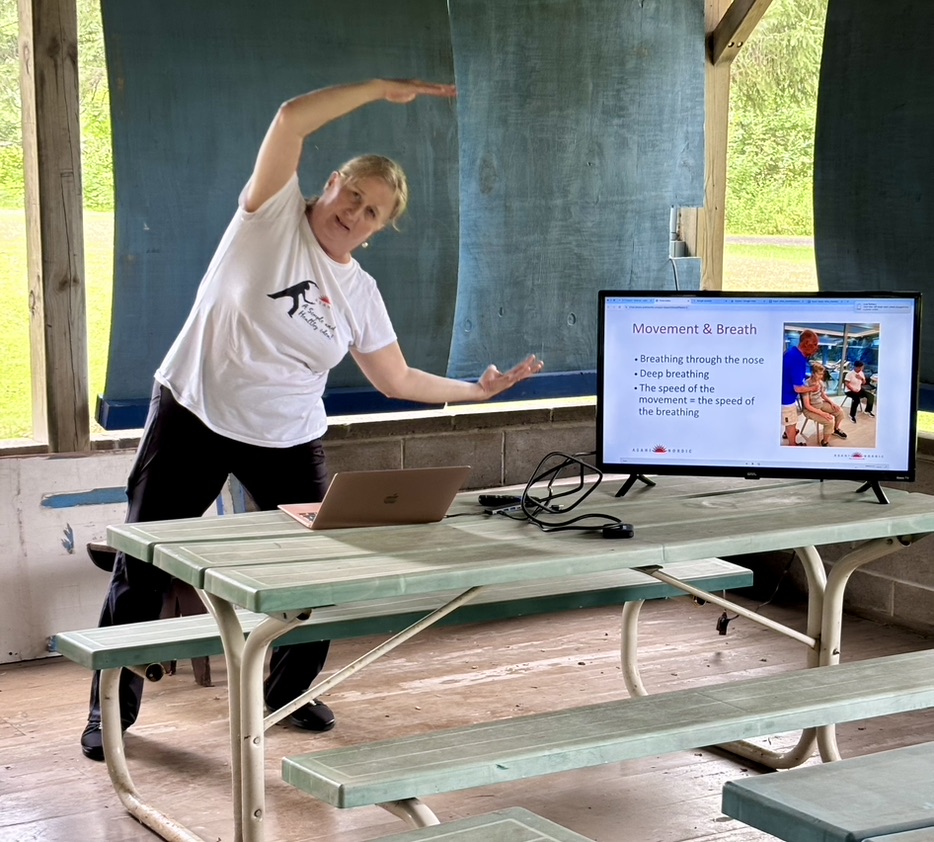
Naomi doing her student teaching at an Asahi Beginning-level teacher training Little Finland in Hurley, WIsconsin, in 2025
Categories: : Asahi & Chronic Pain, Asahi & Menopause, Asahi & Osteoarthritis, Asahi &Circulatory Issues, Asahi and Joint Pain, Asahi and Sociality, Asahi Nordic for a lifetime, Asahi Nordic for All, Asahi teachers' close-ups, Asahi vs. Stress