ASAHI LYING DOWN – THE FORGOTTEN LINK OF ASAHI?
 Margaret Vainio
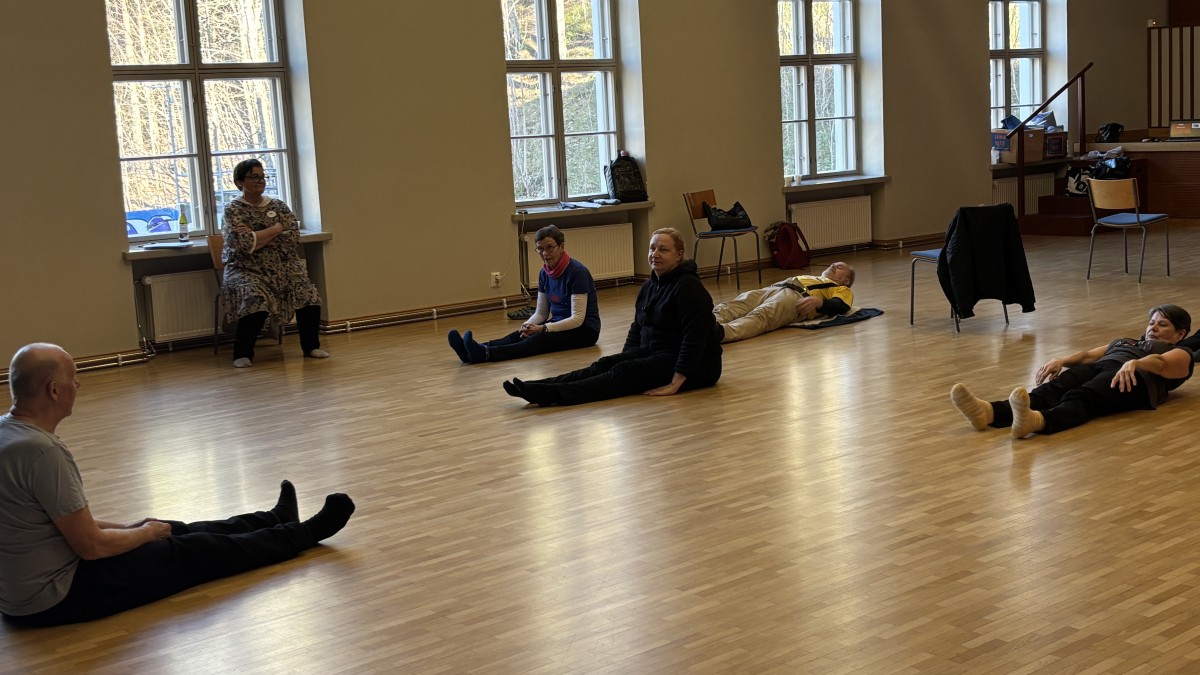
Asahi is usually done standing or sitting, but it can be done lying down - What are the benefits?
Asahi has three basic series that are done standing up. In addition to these, Asahi Nordic’s range of exercises includes two forms of Chair-Asahi, the Flow series, the strength-building exercises of Asahi Power & Dynamics, Asahi for Kids, and the latest addition, Asahi Walking. Alongside physical practice, there is also the Asahi Mindfulness training program, which promotes mental calm and well-being.
On paper, Asahi Nordic’s training curriculum also includes Asahi Lying Down. But has this form of the practice been forgotten?
Originally, Asahi Lying Down was part of Asahi Nordic’s Level B instructor training. However, the Level B curriculum had so much content already, there just wasn’t enough time to teach the series lying-down. And so it became part of the Level A instructor program. Even there, it is covered only briefly, and as a result it has never become widely known among Asahi practitioners. Instead, many think of it as just a curiosity. Even some instructors are hesitant to teach it, or don’t think it’s necessary.
Technically, Asahi Lying Down is based on the First Series. The sequence of movements is the same, and the movements themselves are essentially identical in form. Naturally, practicing while lying down imposes certain limitations, which means that the purpose or effect of some movements differs from their standing versions. For example, the first back exercise in the standing series functions more like an abdominal exercise when performed lying down.
But isn’t the basic idea of Asahi to practice while standing? Promotional materials often highlight the standing format as one of Asahi’s advantages. Yoga also includes standing exercises, but most yoga postures are performed lying or seated on the floor. This has many benefits for flexibility and body control, yet many older people find getting down on the floor difficult - and getting back up again even more difficult.
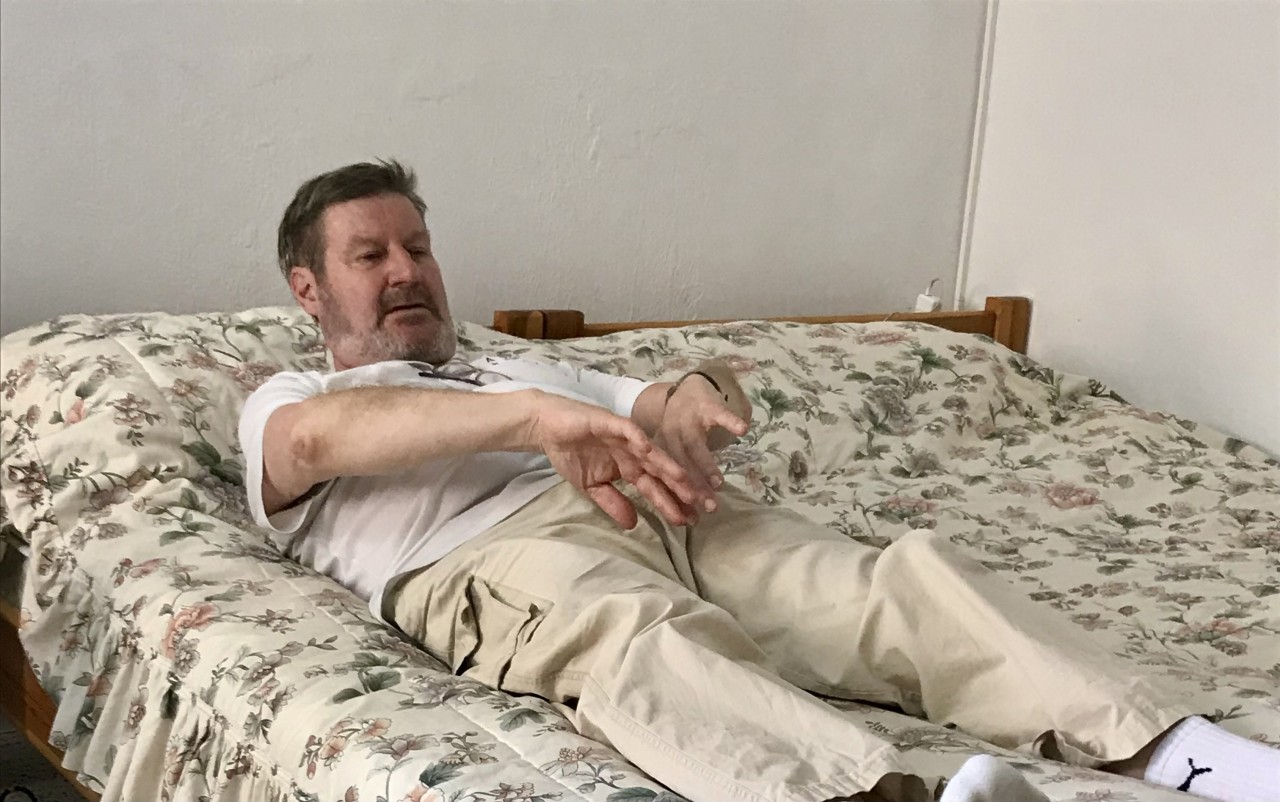
Dr. Mähönen demonstrating Asahi Lying Down at a teacher training in Rhodes, Greece in 2019.
So why practice Asahi lying down, even in bed?
The standing practice is more natural and generally more effective, but standing is not always possible. Sometimes even the seated practice is impossible, if you become ill, undergo surgery, or become confined to bed. Recovery from an operation or illness may take frustratingly long. Age and illness together may eventually make even seated Asahi impossible.
For someone confined to bed, the options for movement are limited. Depending on the underlying condition, movement may not always be advisable. A physician or physiotherapist should evaluate when it is appropriate to begin bed exercises. Sometimes rest is the best medicine, and movement exercises should be postponed until the right time or carried out under the supervision of trained healthcare professionals. Doing the wrong exercises or doing the right ones too enthusiastically on your own can sometimes do more harm than good.
In most cases, however, movement—even very gentle movement—is beneficial. Nowadays, even after major surgery, doctors encourage their patients to get moving as soon as possible, either with assistance or independently. After smaller operations, such as an appendectomy, you can usually start gentle movement as soon as you feel able.
Asahi Lying Down includes exercises that teach you how to get out of bed by rolling onto your side first. this reduces strain on the surgical area. Movement is also important after varicose vein treatment, although strenuous, sweat-inducing exercise is not recommended. Asahi is not an intense workout, and all of its gentle pumping movements benefit people recovering from varicose vein treatment, whether performed standing, sitting, or lying down.

Asahi Lying Down – The Physiology
(Geriatrician Yrjö Mähönen)
Slow movements and deeper breathing improve blood flow back to the heart.
The pumping of the muscles together with changes in pressure within the chest enhance blood circulation without increasing heart rate.The autonomic nervous system is less stressed when lying down.
The heart no longer has to work against gravity.Breathing out slowly activates the vagus nerve.
This strengthens the parasympathetic nervous system, reducing stress. On a heart-rate monitor, this appears as increased heart rate variability.Slow, steady movement has a calming sensory effect.
Internal body awareness soothes the cerebral cortex. Predictable movement reduces the load on the limbic system, which is responsible for emotions and stress.The balance system gets to rest.
The brainstem’s level of alertness decreases, creating a more relaxed and peaceful state.
Being confined to bed is no fun for anyone, but for athletes and physically active people it can be especially challenging psychologically. Their bodies are accustomed to daily exercise, and when that routine is interrupted, frustration often follows. Gentle bed exercises can help slow muscle loss while maintaining a positive mood, which in turn supports a faster recovery.
The goal, of course, is not to remain in bed indefinitely. The aim is to progress from lying down to sitting on the edge of the bed, and gradually to standing. Asahi provides a specific exercise routine for each stage. Once you have learned the First Series, you always have it with you. You may forget the helpful instructions from the physical therapist, or lose the printed handouts, but as an Asahi practitioner, you have the movements stored in muscle memory.
Self-directed exercise helps maintain muscle function, prevents circulatory problems and digestive issues, and improves mood. It keeps metabolism active, eases muscle and back pain, and improves awareness of both the body and the surrounding environment. If bed rest continues for an extended period, movement exercises also help prevent bed sores.
While lying down, it is possible to practice lifting the head from the pillow, bending the torso, and raising the limbs—all movements that strengthen the abilities needed to sit up. Practicing Asahi seated, in turn, develops the skills required for standing up.
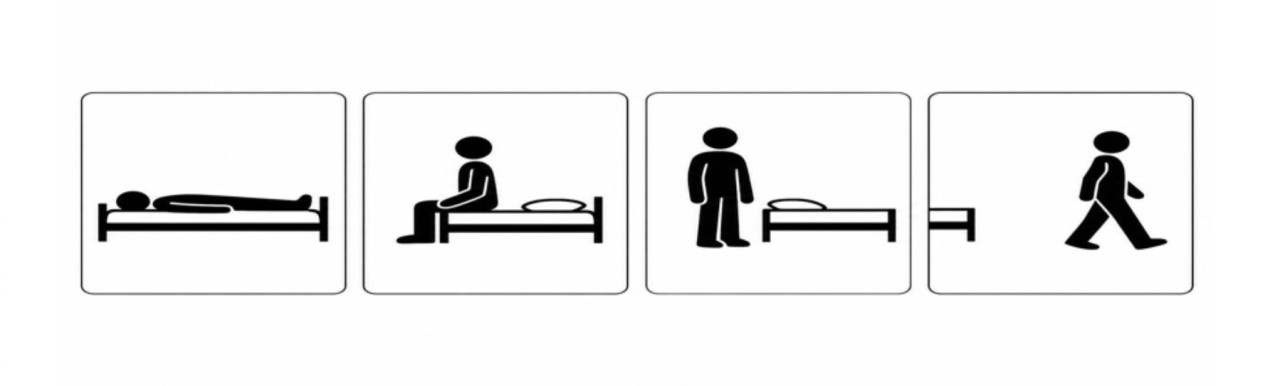
The Asahi staircase: from lying down to sitting, from sitting to standing, and from standing to movement.
Practicing Asahi Lying Down is not only for recovery from illness or injury. The average person spends roughly one-third of life in bed—some even more. Sometimes people lie down simply to relax, if it feels pleasant and there’s nothing better to do. At other times, you may be laying in bed if your sleep is interrupted, if you are stiff from a bad sleeping position, or you can’t get back to sleep.
Asahi movements help relieve numbness and stiffness, breathing becomes more regular, and the nervous system calms down. Falling asleep again may become easier, and your racing thoughts gradually settle down.
Asahi Lying Down can also replace or serve as a good addition to an afternoon nap. The practice reduces swelling in the legs, relieves fatigue, aids digestion, and calms the nerves, and may help with back pain and other aches. After a short Asahi session on the sofa, the floor, or in bed, many people find they have renewed energy for the rest of the day.
Asahi Lying Down can become a pleasant addition to your daily routine and contribute to overall well-being. During the summer holidays, you can even try in a lounger—trying it in a hammock is probably not a good idea, though! Here is a short video demonstrating one version of Asahi Lying Down.
Practicing Asahi Lying Down also teaches you efficient ways to move gracefully from lying down into a seated position. If your muscle strength and coordination have weakened, and you have gained excess weight, rising from bed may look more like a seal sliding off a rock into the sea than a person getting out of bed. And it might sound sort of like that, too.
The best way to learn the movements of Asahi Lying Down is from a trained Asahi Nordic instructor. Check here for teachers in your area.
Text: Ilpo Jalamo